About CRPS
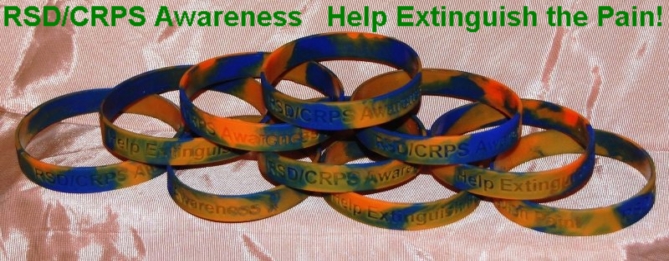 Kathryn fell on her left knee while playing at school on April 1, 2008. Her body responded with inappropriate, excruciating and escalating pain that quickly spread to her entire lower left region. She was diagnosed with CRPS on May 1, 2008. Kathryn’s disorder has two names. The older name is Reflex Sympathetic Dystrophy, RSD. Today, the term Complex(or Chronic) Regional Pain Syndrome, CRPS, is becoming more widely used to describe the disorder.
According to the Pain Management Center, Department of Anesthesiology at the University of California, CRPS is a pain syndrome accompanied by “excruciating pain and diverse autonomic dysfunctions…disproportionate to any inciting and recovering event.”[1] This encapsulates the overall problem with diagnosing the disease since there is no easily discoverable physical event or trauma that necessarily leads to the overwhelming pain.
With CRPS, nerves actually misfire and send constant pain signals to the brain. Long after an injury has healed, the nerves continue to misfire. It is a painful, aching, burning pain that reaches deep into the body. It is both a systemic disease that involves the central and peripheral nervous systems.[2] There is an increase in the number of diagnosed pediatric cases over the past few years.[3]
There are two types of CRPS recognized in the medical community.
- Type 1 CRPS – occurs without nerve injury or any significant or known precipitating event. Pain is disproportionate with any injury or cause. There are often changes in skin blood flow and some evidence of swelling. Increased sensitivity to skin, muscle cramps, limited mobility, increased sweating, warm red skin that may become cold later, and some swelling may occur.
- Type II CRPS – formerly called ‘causalgia’, this type of CRPS occurs with nerve injury of some type. There is a continual pain that persists after an injury and it also includes some swelling and changes in skin blood flow or skin color changes. The pain is often unusual for the type of injury and the pain persists even after healing occurs, with pain becoming even more severe as time passes. Swelling spreads and wasting often begins as disease progresses.
Although there are two types of CRPS, they both mimic the same signs and symptoms and they are both extremely difficult to diagnose, treat, and manage. CRPS is a progressive neurological disorder that affects skin, muscles, joints, and bones. It most often begins as the result of a broken limb such as a leg or arm. But with Type I, no injury is noted and in more than 30% of cases, there is no known injury or causal event.
And to make CRPS even more challenging:
“Of all the chronic neuropathic pain syndromes, none has perplexed patient, clinical, and scientist more than the complex regional pain syndromes (CRPS), heretofore known as reflex sympathetic dystrophy (RSD) and causalgia.”[4]
CRPS sometimes begins as an injury to nerves or soft tissue such as a broken bone. It can occur with no known cause. Unfortunately, the healing process does not occur normally and chronic pain ensues. A minor injury can escalate into a more severe case of CRPS and the magnitude or severity of the injury does not have an impact on CRPS’s onset.
Once an injury or trauma occurs, the sympathetic nervous system takes on a different level of functioning. It does not follow the normal function expected after the healing process begins. The pain may be constant or intermittent, making it even more difficult to understand and to diagnose.
CRPS is not psychological and it is not a symptom of mental illness in any way, shape or form. It is real. And it is agonizing for those who suffer — mainly because it is so misunderstood by everyone and the medical community is so poorly educated about the disease.
Stages of Pain and Symptoms
The pain may start as a ‘normal’ pain in a particular limb and then over time, it moves to other limbs of the body. Some people have described it as feeling like arthritis that moves from joint to joint. The pain presents in varying levels from mild sensitivity and slight pain, to high degrees of burning pain and extreme sensitivity.
The pain can become so unbearable that even the lightest clothing can cause anguish and many people with CRPS are unable to wear outer clothing at all from time to time. Unfortunately, at this time, there are no proven medications or surgical remedies to correct the condition or permanently eliminate the terrible pain associated with RSD/CRPS.[5]
The early signs and symptoms typically include the following (this is not a complete listing of the signs and symptoms):[6]
- Pain and ‘burning’
- Hyperesthesia (heightened sensitivity of skin or other body parts)
- Hyperalgesia (increased sensitivity to pain; abnormal pain sense)
- Allodynia (painful response to a typically non-painful event or stimulus
Some people have described CRPS as being worse than cancer, because there is no obvious reason for the pain and no urgency to find a diagnosis and cure. Many people suffering with CRPS end up taking the same medications as cancer patients to arrest the pain, but only after extreme scrutiny and misdiagnosis for as long as 2-3 years. Cancer patients normally don’t have this duration of pain before being properly diagnosed and treated. They also receive more empathy and compassion from the medical community, family, and friends than people suffering with CRPS.
Pain progresses in three stages:
- Acute Pain. This involves burning pain, swelling, progressive sensitivity to touch, joint pain, and skin color or temperature changes.
- Dystrophic Pain. Involves constant pain and swelling and leads to muscle stiffness. Arms, feet, and legs may be very cold or turn blue.
- Atrophic Pain. Skin becomes very cool and shiny. There is an increase in muscle stiffness and muscles become weaker. Pain can spread to multiple limbs.
Other symptoms of RSD/CRPS include:
- Muscle spasms
- Tremors
- Weakness in limbs and muscles
- Headaches
- Excessive sweating
- Unusual fatigue
- Skin irritations, dermatitis, eczema
- Depression and anxiety (a side effect of the disease itself)
According to the CRPS Association, less than 200,000 cases of RSD/CRPS are reported in the United States each year. However, it is estimated that more than 1.2 million Americans are affected with the disease.[7] Although the condition can occur at any age, it is more likely to occur in adults. The mean age for diagnosis is 40.2 years. It is also more likely to occur in women than men.
But children are not immune to the ravages of CRPS.
Other key facts regarding RSD/CRPS include:[8]
- CRPS is a malfunction of the nervous system that sends constant pain signals to the brain. The pain is real.
- CRPS follows as many as 5% of all nerve injuries.
- A major characteristic is the fact that the pain appears to be much more severe and uncomfortable than is expected for a particular type of injury. This creates doubt about the severity of the pain in the eyes of medical practitioners, family, and friends.
- Early diagnosis is critical – yet diagnosis is difficult and takes a long time. Many people with CRPS average seeing at least five (5) physicians over a long period of time before being accurately diagnosed.
- The number of young girls being diagnosed with CRPS is increasing, but the reason is not clear.
- Although CRPS is not a psychological diagnosis, people with the disease can develop psychological problems and symptoms due to the reaction of others who have difficulty believing the pain is real or severe. They also develop psychological reactions because the pain is so severe and limits their ability to function normally in a world where their illness is so misunderstood.
- Treatment requires a holistic approach that encompasses medication, physical therapy, psychological support, sympathetic nerve blocks, acupuncture, meditation, and other types of special procedures or therapies. No single approach can adequately address the pain and seriousness of the disease.
In addition to the above, it should also be noted that:[9]
- The average duration of CRPS before pain center evaluation and successful diagnosis is 30 months .
- The condition is 2.3 to 3 times more frequently diagnosed in females rather than males.
- Pain can cause psychological symptoms due to the magnitude of the pain and misunderstanding about the illness by others around the patient. Those psychological symptoms include anxiety, depression, post-traumatic stress syndrome, fear, and anger.
“CRPS can be debilitating and it is life changing for those who suffer. The medical community often contributes to the anguish and pain of those who suffer from RSD/CRPS due to their lack of knowledge and information about the disease.” (As Elana Juris who suffers with CRPS notes in her book, Positive Options for Reflex Sympathetic Dystrophy:[10])
The RSDA website clarifies this further.
“Many generalist physicians are not aware of the new research on neuropathic pain, yet claim to be prepared to treat CRPS. Be aware of this: in Nelson’s Textbook of Pediatrics, 16th edition, published in 2000 (Phila.:WB Saunders Co.), which is a 2,300+ page book, approximately eight inches of half-column text is devoted to CRPS, much of it under the sub-head “Psychosomatic Illnesses.” This gives us a clue as to what many physicians are learning about pediatric CRPS, even in year 2001. The footnote references are all from sources at least five years old, some much older. Neuropathic pain research has advanced by miles in the past five years, so a parent must insist on an up-to-date and informed physician as a starting point.”[11]
Finding a doctor who can adequately diagnose and treat CRPS is a challenge unto itself. But it is critical to the care of the child with CRPS. Becoming an aggressive advocate for your child becomes an essential component of the treatment process.
Diagnosis and Support
CRPS is difficult to diagnosis and patient support is often slow in coming. It presents particular challenges for individuals affected with the condition, and especially children whose motives are questioned. According to the University of the California Pain Management Center, diagnosis depends solely on “meticulous history and physical examination without any confirmation by specific test procedure (or gold standard)”1.
Some of the primary challenges of diagnosis include:
- A global lack of proper understanding and education about CRPS among the physician community.
- Inability of primary care physicians, generalists and many other healthcare professionals to understand, evaluate, and diagnose the condition. They often delay referral of the patients to a specialist who can better diagnose and manage the condition due to their disbelief of patient reported symptoms as being ‘real’.
- Physicians often do not believe pain is as severe as patients describe it, given the physical presentation or nature of the injury, therefore, it is dismissed as psychological in nature.
- Inability to get insurance companies to recognize the complexity of the disease and the importance of reimbursement for multi-disciplinary treatment which often includes medical, psychological, and alternative medicine intervention.
- Loss of employment, social structure, friends, and even family due to a misunderstanding of the disease and a perception that the condition is psychological in nature.
- Lack of school administrator and teacher support when adolescents suffer from the disease, due to their lack of understanding the illness and assumption that it is psychological, or that the student is trying to avoid work or activities.
- Lack of patient empowerment and assertiveness to access the necessary healthcare services required.
Diagnosis of RSD/CRPS is difficult and many physicians are unaware of the disease. Others discount it as psychological or ignore the symptoms. There is no single laboratory or radiology test to diagnose RSD/CRPS. Diagnosis usually begins by excluding and ruling out other potential conditions with similar signs and symptoms – valuable time is lost while the patient suffers in pain. It takes a skilled doctor to diagnose the condition and one who is empathetic and understanding of the symptoms.
More importantly, it takes a doctor who recognizes that something unusual is occurring. If a doctor is unable to diagnose or understand a condition, he/she has a responsibility to refer a patient to a specialist who can continue with diagnostic evaluation and neurological examinations. Unfortunately, many physicians lack the knowledge of RSD/CRPS to take proper steps toward an expedient diagnosis and treatment.
Primary Indicators
One of the first indicators that CRPS may be the problem is the pain response that is evoked with even a mild sensory touch or stimuli. Obtaining a thorough history and conducting a complete neurological exam is critical at this point. Some of the potential diagnostic observations include:[12]
- Observance of skin color and temperature
- Note of swelling
- Observance of vascular reactivity
- Overgrown and grooved nails
- Swollen joints
- Stiff joints and limbs
- Muscle weakness
- Excessive sweating, especially around the painful area or joint
Although these are good diagnostic observations, it must be noted that many people with CRPS do not initially present with any of these symptoms. As a matter of fact, many people initially begin with only the severe pain that is exacerbated by touch. Some patients complain that the slightest touch of clothing creates a horrible, painful sensation. This is one reason their pain is discounted as a psychological occurrence.
Since CRPS is poorly understood and under-diagnosed by many doctors, it is an agonizing situation for patients and their families. One important fact that must be understood is that the condition is not psychological.
Doctors often discount a patient’s description of the severity of pain and ignore the symptoms that may indicate CRPS. Rather than treating the patient respectfully and seeking a proper diagnosis, they close their minds to anything other than a psychological diagnosis. The patient and their family are left to suffer until they are able to take matters into their own hands.
Diagnosis is as much about ‘ruling out’ other conditions, as it is about diagnosing CRPS. Some of the diagnostic testing and tools used for clinical assessment include the following:
| Radiologic images/MRI | Nerve conduction studies |
| Bone scan | Sympathetic nerve blocks |
| Skin tests | Nerve conduction studies |
| Thermography | Quantitative sensory testing |
These tests, and others, can aid in clinical assessment and diagnosis. Much more must be learned to more effectively and efficiently diagnose CRPS.
The Far Reaching Implications of Mis-diagnosis
Part of the problem with diagnosis is that many doctors are incapable, uninformed, or unable to recognize the signs and symptoms. They often assume that the patient is over-reacting or seeking attention rather than truly experiencing the pain they describe. Many doctors perceive the condition is psychological rather than true pain. Others simply do not know where to start with diagnosis and they procrastinate, delay referral to specialists, or otherwise handle the situation poorly.
The absence of any physical signs only complicates this problem. Physicians are typically accustomed to diagnosing illness based on physical symptoms, and in the absence of these physical symptoms, they are often rendered helpless in providing a diagnosis. In the case of chronic pain such as CRPS, the stakes are high for patients.
This is particularly problematic in children where there may be the perception that children are exaggerating pain or trying to avoid some type of activity or schoolwork. Children in this situation suffer greatly because pediatricians and other physicians who are untrained and unaware of CRPS as a serious illness affecting hundreds of thousands of people are overlooking this as a diagnosis. Delaying diagnosis and treatment only makes the condition worse and leads to greater physical and psychological distress for many patients.
Diagnosis of children is also hindered by a physician’s perception that a parent or guardian is over-reacting or being over-protective of a ‘complaining child’. They often assume that the parent or guardian is part of the problem and is provoking the situation with their constant worry and search for a diagnosis and cure. Many doctors go so far as to assume that the parent or guardian may have a psychological problem contributing to the child’s pain.
[1] Pain Management Center, Department of Anesthesiology, David Geffen School of Medicine, University of California, Los Angeles, LA, USA. ehsu@mednet.ucla.edu
[2] Janig, W., Baron, R. Complex regional pain syndrome: mystery explained? Lancet Neurol 2003; 2:687-97.
[3] Lee, B., et. al. (2002). Physical therapy and cognitive-behavioral treatment for complex regional pain syndromes. Journal of Pediatrics, 2002; 141:135-40.
[4] Galer, B.S., CRPS in Loesser J (ed) Bonica’s Management of Pain 3rd Ed. Lippincott Williams & Wilkins; 2001 (388).
[6] Hardin, RN et al. Pain 1999:83, 211-221; Birklein, F., Pain, 2001:94, 1-6.
[7] Loeser JD. Ed. Bonica’s the management of pain. 3rd Ed. Philadelphia, PA: Lippincott, Williams, & Wilkins; 2001:388-411.
[9] Raja SN et al., Anesthesiology. 2002;96:1254-1260.
[11]Charlesworth, Daria, RN, MS. “Your Child is Diagnosed with CRPS. http://www.rsds.org/4/youth/your_child_is_diagnosed.html. Retrieved June 10, 2009.

 Kathryn's Pages