Ketamine Treatment
Ketamine and CRPS
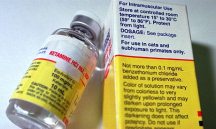
In an article discussing Ketamine Infusion Therapy in PAIN MEDICINE, September 2004, it says, “Although Ketamine may have more than one mechanism of action, the basis for using it to treat CRPS/RSDS may reside in its strong ability to block NMDA receptors. Experimental evidence suggests that a sufficiently intense or prolonged painful stimulus causes an extraordinary release of glutamate from peripheral nociceptive afferents onto dorsal horn neurons within the spinal cord. The glutamate released, in turn, stimulates NMDA receptors on second-order neurons that produce the phenomena of windup and central sensitization. It is reasonable to consider that, by blocking NMDA receptors, one might also be able to block cellular mechanisms supporting windup and central sensitization [4–7,15]. Ketamine is the only potent NMDA-blocking drug currently available for clinical use. Our interpretation is that an appropriately prolonged infusion of Ketamine appears to maintain a level of Ketamine in the central nervous system long enough to reverse the effects of the sensitization process and associated pain.”
You can read more of this article by going to JOURNAL OF PAIN MEDICINE ARTICLE ON KETAMINE AND CRPS

 Kathryn's Pages